
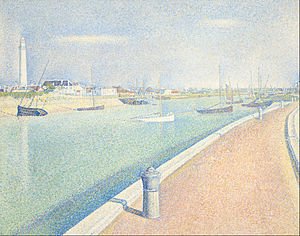
Gravelines Channel is an 1890 painting by French Post-Impressionist artist Georges Seurat This work is located in the Annonciade Museum in Saint-Tropez, France.
In the late 1800s, the Gravelines Channel was a vital artery for trade and transportation in northern France, connecting the Aa River to the North Sea. This period saw significant developments that enhanced the channel’s importance in regional and international commerce.
During the late 19th century, the Gravelines Channel facilitated the movement of goods and raw materials crucial to the industrializing economy of France. The nearby town of Gravelines and the surrounding region benefited from increased trade activities. The channel supported local industries, including fishing, shipbuilding, and agriculture, by providing an efficient route for transporting products to broader markets. The Port of Gravelines was bustling with activity, handling coal, timber, and other commodities that fueled industrial growth.
The late 1800s were marked by efforts to modernize the infrastructure of the Gravelines Channel to accommodate larger vessels and increased traffic. Improvements in the channel’s navigation system, including dredging and the construction of locks and basins, ensured smoother and safer passage for ships. These enhancements were crucial for maintaining the competitiveness of the port and facilitating international trade.
Technological advancements of the era, such as steam-powered ships, transformed maritime transport. The Gravelines Channel adapted to these changes, becoming an essential route for steamships engaged in both coastal and international trade. This transition from sail to steam marked a significant shift in the efficiency and speed of maritime commerce.
The bustling activity along the channel brought economic prosperity to Gravelines and its vicinity. The port town saw growth in population and urban development as workers and businesses flocked to the area. The channel’s role in trade and transportation contributed to the overall economic vitality of the region, making it a critical hub in the late 19th-century maritime network.